
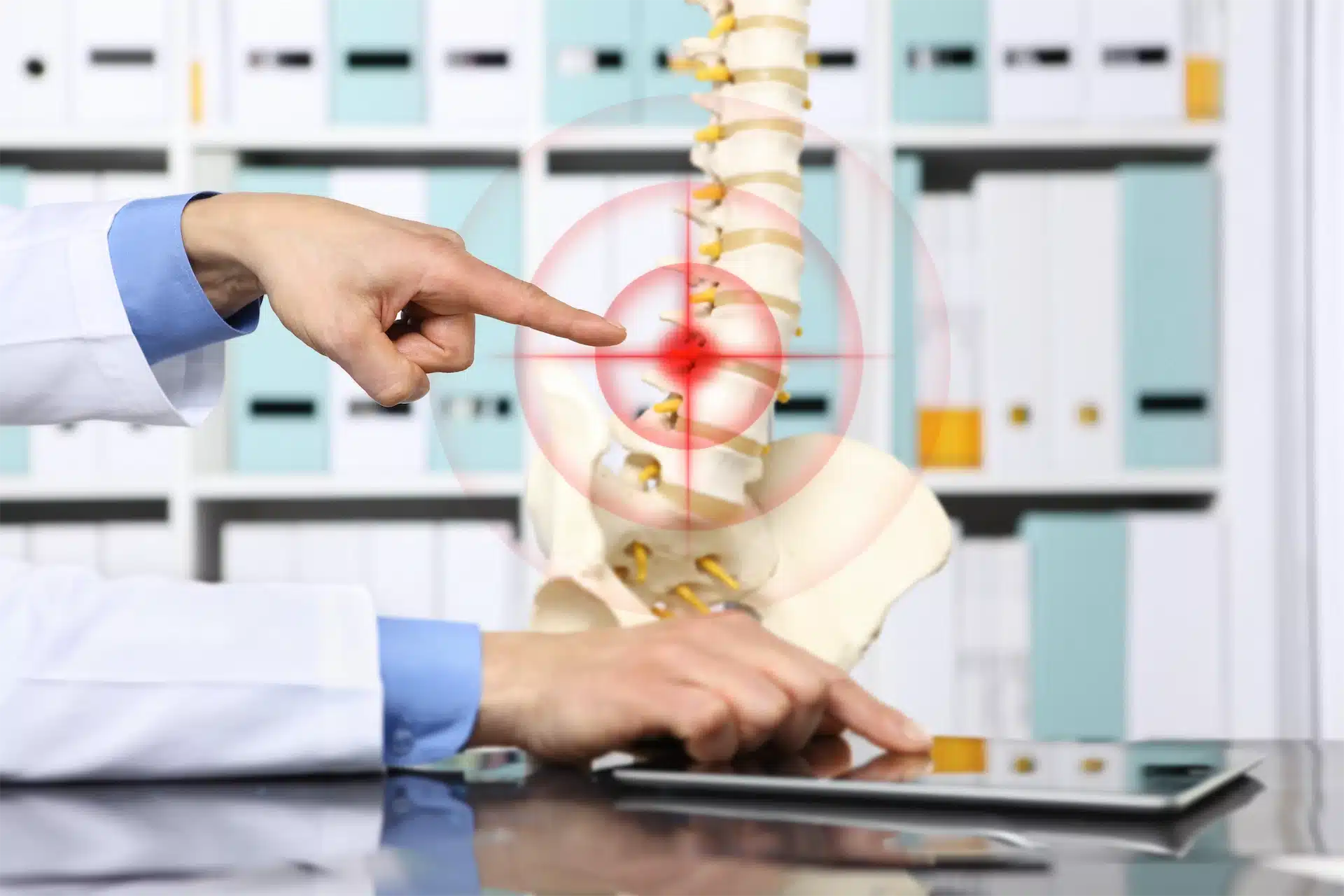
If a doctor or an MRI report has mentioned a bulging disc or a herniated disc, you are probably wondering what that means for your pain and your options. The two terms sound similar and are often used interchangeably, but they describe different changes in the disc. That difference can affect your symptoms and how you approach treatment.
At Clanahan Wellness Center in Pekin, we help patients with disc-related back and neck pain understand their condition before any treatment begins. This guide explains how each condition develops, which one tends to cause more trouble, and what non-surgical care can look like.
If disc pain is affecting your day, speak with our team about whether spinal decompression in Pekin could help.
How a Bulging Disc and a Herniated Disc Differ
Each disc between your vertebrae has two parts. There is a tough outer ring and a softer, gel-like center. Together they cushion your spine and allow it to bend and twist.
A bulging disc extends beyond its normal space, usually across a wide section of its edge. The outer ring stays intact. Think of it like a tire that sags slightly under weight. Bulging discs are common and often develop gradually with age and everyday wear.
A herniated disc happens when a crack or tear in the outer ring lets some of the soft center push through. The change is usually more localized, affecting one smaller area of the disc. Herniations can develop over time or after a specific strain, such as lifting or twisting.
In short:
- Outer ring: It stays intact with a bulge and is torn with a herniation.
- Area affected: A bulge usually involves a wide section of the disc. A herniation is usually focused in one spot.
- Typical cause: A bulge is often gradual wear. A herniation can be gradual or follow a specific strain.
Which Is Worse, a Bulging or Herniated Disc?
In general, a herniated disc is more likely to cause symptoms. When the inner material pushes out, it can press on or irritate a nearby nerve, and that can lead to pain, numbness, or tingling.
The label alone does not tell the whole story, though. Many people have bulging or herniated discs on imaging and feel little or no pain. A small bulge pressing on a nerve can hurt more than a larger herniation that does not touch one. Your symptoms and a hands-on exam matter as much as the imaging report.
Can a Bulging Disc Turn Into a Herniation?
It can, but it is not inevitable. If the outer ring continues to weaken, a bulge may progress into a herniation over time. Repeated heavy lifting, prolonged sitting, poor posture, and sudden twisting can all add stress to a disc that is already under strain.
Supporting your spine early can make a difference. Staying active within comfortable limits, strengthening the muscles that support your back, and addressing pain before it becomes chronic all help protect the disc.
What Do Disc Symptoms Feel Like?
Symptoms depend on which disc is involved and whether a nerve is affected. Common signs include:
- Aching or sharp pain in the low back or neck
- Pain that travels into the buttock, hip, or leg, often called sciatica
- Pain, numbness, or tingling that travels into the shoulder, arm, or hand
- Muscle weakness in the leg or arm
- Pain that gets worse with sitting, bending, coughing, or sneezing
For a closer look at the warning signs, read 5 Signs You Might Benefit from Spinal Decompression.
How Are Bulging and Herniated Discs Treated Without Surgery?
Many people with bulging or herniated discs improve with conservative, non-surgical care. At our office, treatment begins with a consultation and exam to understand your symptoms, your history, and any imaging you already have. From there, we build a plan around your specific condition.
That plan may include:
- Spinal decompression therapy: A computer-controlled table gently stretches the spine in cycles to reduce pressure on the affected disc. Learn more about decompression back therapy and neck decompression therapy.
- Corrective exercises: Guided movements that strengthen the core and improve spinal support.
- Posture and daily habit guidance: Changes to how you sit, lift, and sleep to reduce ongoing stress on the disc.
Dr. Todd Clanahan has cared for patients since 1999 and is nationally certified in nonsurgical spinal decompression. To learn how decompression affects the disc, read The Science Behind Spinal Decompression.
When a Disc Problem Needs Immediate Medical Care
Some symptoms need emergency medical attention right away rather than chiropractic or home care:
- Loss of bladder or bowel control
- Numbness in the groin or inner thigh area
- Sudden or rapidly worsening weakness in the legs
- Severe pain after a serious fall or injury
Frequently Asked Questions
Does a bulging disc always cause pain?
No. Many bulging discs cause no symptoms at all and are found only on imaging done for another reason. Pain usually develops when the bulge irritates a nerve or surrounding tissue.
Can a herniated disc heal on its own?
Some herniations improve over time as inflammation settles and the body adapts. Others continue to cause symptoms, especially when a nerve stays irritated. An evaluation can help you understand which path you are on.
Do I need an MRI to know which one I have?
Not always. A thorough exam can often identify a likely disc problem. If you already have an MRI, bring it to your consultation. If imaging would change your care, we will discuss it with you.
Is non-surgical treatment an option for both?
In many cases, yes. Both bulging and herniated discs are commonly managed with non-surgical care. Your exam determines whether decompression and related treatments are a good fit for you.
Get Answers About Your Disc Pain in Pekin
Knowing whether you have a bulging or herniated disc is a helpful start, but your symptoms and exam findings guide the right plan. If disc pain is limiting how you work, sleep, or move, a clear evaluation is the best next step.
Clanahan Wellness Center is located at 2221 N Parkway Dr in Pekin, serving Peoria, East Peoria, and surrounding Central Illinois communities. Schedule a consultation today to learn whether spinal decompression can help you find relief.